

Building a PR Career in Times of Uncertainty
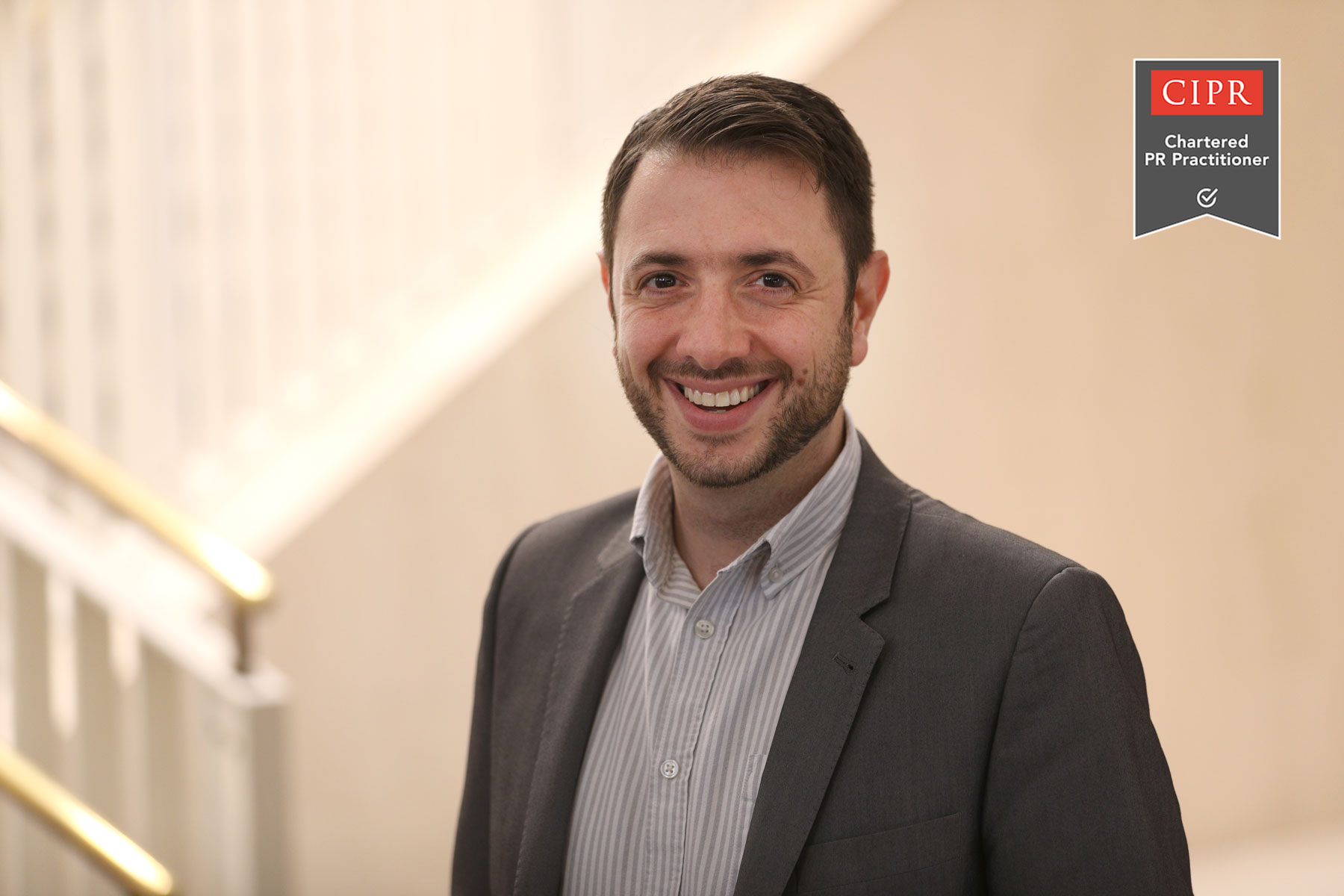
Jon Gerlis, Head of Public Relations and Policy at the Chartered Institute of Public Relations
Public relations is one of the most dynamic, varied, and rewarding careers you could have. If you are naturally curious and creative, thrive on building relationships, and love the idea of shaping how organisations engage with the world, then PR could be the profession for you. With no two days the same, it is a field that constantly challenges and stretches those working within it. The rewards, both professional and personal, can be considerable.
How to get into and build a career in public relations is a topic I will be discussing when I have the pleasure of visiting Bosnia in a few weeks. We’ll explore what public relations is, the role of ethics and trust, and practical steps you can take to build a credible career.
One of the attractions of public relations as a career is that it is a profession that is varied and never stands still. It sits across every organisation and industry and is constantly evolving. Two decades ago, social media emerged a new communications tool and since then we have seen the dawn of influencer marketing and, of course, the recent and rapid rise of artificial intelligence. All these developments have played a part in adapting the way PR professionals go about their job with a clear purpose to manage reputation, with the aim of earning understanding and support to influence opinion and behaviour.
That definition is from the Chartered Institute of Public Relations (CIPR), the world's only Royal Chartered professional body for public relations practitioners. The Institute was founded in 1948 by a group of professionals who recognised the vital role public relations played in the war effort and saw the need for sharing the lessons learned to support the post-war rebuild. Today it has around 11,500 members. It is a professional body that exists, like most bodies that represent a profession, to play four key roles:
- Lead practice development so members have guidance and support to navigate the technological, economic, social and political pressures and changes. In recent years we have produced guidance on developing a crisis communications plan, editing Wikipedia, and measuring and evaluating public relations work.
- Build a resilient community of practice so members have a network of fellow professionals they can learn from and collaborate with. We have regional and sector groups led by a network of over 400 volunteers that run events, many online and free to attend.
- Champion lifelong learning so we can demonstrate to the outside world that our knowledge and skills are up to date and relevant. We are the only body in the world that can offer chartership and there are nearly 1,000 chartered professionals. Over 2,000 members a year record their continuous professional development.
- Advocate for public relations with employers, clients and the wider public so that they better understand the vital role we play in organisational success. We work with the media, politicians, and business leaders to promote the value and social impact of the work our members do.
This work is supported by the face the IPR became the CIPR in 2005 when it received chartered status. Being a chartered body comes with a set of responsibilities, most notably a clear obligation in law to work for the public good and demand the same of members.
It does this by requiring every member to sign up to the CIPR’s code of conduct which guides members and holds them accountable to a set of principles. This includes maintaining high standards of professional endeavour, integrity, and confidentiality, dealing honestly and fairly in business with employers, employees, clients, fellow professionals, other professions and the public, and upholding the reputation of the public relations profession.
This matters more than ever. The rise of artificial intelligence and the proliferation of misinformation have made professional codes of conduct essential. AI tools can now assist with a significant proportion of PR work. They carry a potential for misuse by generating misinformation and disinformation and can embed bias that neglects underrepresented and diverse perspectives. In this environment, the PR professional who operates without a firm ethical framework is not just a risk to their own reputation, they are a risk to the organisations they represent and to the integrity of public discourse itself. A code of conduct should act as the professional's compass in a world where the technical capacity to mislead has never been greater.
For students entering the profession today, the reality is that ethics is not a module to pass and forget but a discipline to be considered on a daily basis. The Global Alliance for Public Relations and Communication Management has established that AI utilisation in the profession must be governed by human oversight and aligned with the public interest and governance models that address privacy, misinformation, disinformation, intellectual property, security, and bias. In the world's first dedicated Ethics Guide to AI in PR, the CIPR developed a practical decision-making framework to help practitioners navigate novel ethical dilemmas as they arise. As former President of the CIPR Professor Anne Gregory warns, qualities such as empathy, ethical judgement, and understanding how organisational leaders think cannot and should not be handed over to AI. Those distinctly human qualities are precisely what a professional code of conduct exists to protect.
There has probably never been a more exciting time to consider a career in public relations. The world is uncertain and organisations need skilled professionals to help them navigate it and build trusted relationships with key audiences. In a post-truth era, it is these skills will define the most trusted and respected PR careers of the next generation.